EMS/BMS monitoring and integration
Understand infrastructure status and identify conditions that need attention.
Explore solution ↗ Let's Talk ↗
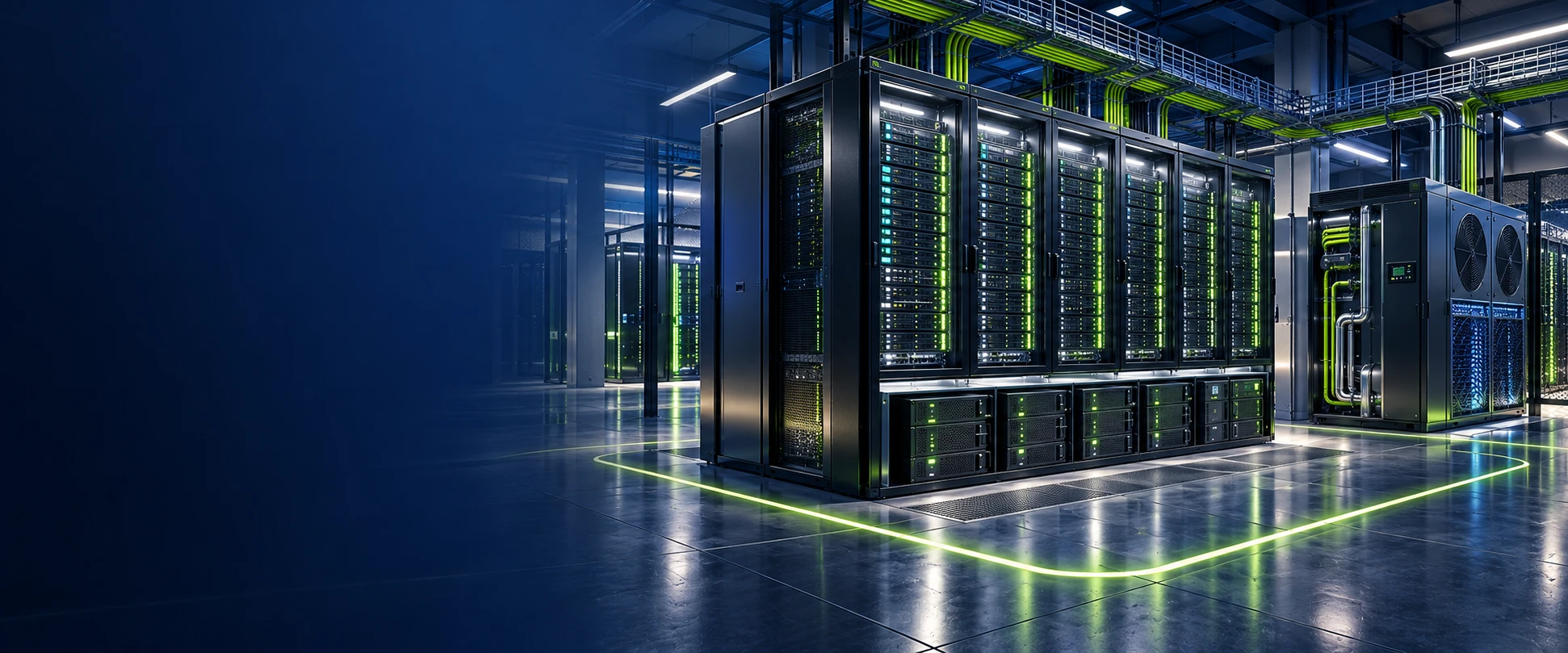
Overheating equipment, no backup power, spaces you have outgrown, or connections that are difficult to maintain. We start with the problem to integrate engineering, infrastructure, and execution.
Find your needConfiguration and activities are defined based on the site, equipment, and scope of each project.
Understand infrastructure status and identify conditions that need attention.
Explore solution ↗Evaluate UPS systems, batteries, and backup generation as a connected system based on load and runtime.
Explore solution ↗Address hot spots and organize airflow based on equipment and space.
Explore solution ↗Coordinate power, cooling, racks, connectivity, and monitoring for growth.
Explore solution ↗Organize racks, cabling, power, and environmental conditions in equipment rooms.
Explore solution ↗Define what to back up, retention periods, and restore testing based on priorities.
Explore solution ↗Integrate cabling, local networks, and wireless connectivity for each location.
Explore solution ↗Define cameras, access points, and permissions based on the areas requiring coverage.
Explore solution ↗You do not always need a full project or new equipment. First, we review what is happening; then we define the alternatives and the appropriate scope.
These are the spaces where we apply our solutions, not fixed packages. Components and deliverables are defined based on your situation.
 Heat and airflow
When air does not reach where it is needed, adding cooling does not always solve the problem. We review the space and load distribution to define the work required.
Temperatures, heat load, rack layout, airflow paths, and available cooling capacity.
Airflow management; cooling adjustments; evaluation of aisle containment or hot and cold air separation; temperature and humidity monitoring.
Assessment, proposed modifications, and criteria for verifying the conditions addressed.
 UPS and battery backup
We define backup power based on the equipment you need to protect and the required runtime, without assuming that every UPS works for every installation.
Connected load, existing UPS capacity and condition, batteries, required runtime, and installation conditions.
UPS sizing and integration; battery inspection and replacement; electrical distribution modifications; maintenance and monitoring of compatible equipment.
Proposed capacity and configuration, agreed-upon installation or work, testing, and technical documentation.
Runtime for extended outagesWe evaluate how to complement existing backup power with emergency generation and how it would coordinate with the site's electrical installation.
Priority loads, target runtime, available space, building conditions, and compatibility with the electrical system and UPS.
Emergency generator, transfer switching, and coordination with existing backup power. Integration and supply are determined through engineering, feasibility validation, and an agreed-upon scope.
Feasibility assessment, technical scope, responsibilities, and testing criteria for the agreed-upon configuration.
 Electrical capacity and distribution
Before connecting more equipment, we review the available infrastructure and the modifications needed to support the new load.
Current and anticipated loads, distribution, circuits, and connection points within the contracted technical scope.
Electrical distribution and conditioned power modifications, PDU and backup power integration, and coordination of phased work.
Site survey, proposed modifications, technical documentation, and testing of the modified installation.
 Racks, cabling, and connectivity
We organize physical infrastructure to make it easier to identify, maintain, and expand.
Rack occupancy, cable routes, connection identification, copper and fiber links, and MDF or IDF conditions.
Rack and cable pathway modifications; structured cabling and fiber; cable dressing, labeling, and wire lists; link testing within scope.
Inventory or connection list, identification, documentation, and results of contracted testing.
 Monitoring and alerts
Visibility helps identify events and prioritize responses. We define which equipment and variables should be monitored and who should receive each alert.
Equipment compatibility, available variables, monitoring needs, recipients, and escalation rules.
Monitoring of compatible UPS systems, PDUs, cooling systems, and generators; temperature and humidity tracking; alerts and performance reports.
Monitored asset inventory, agreed-upon variables and thresholds, alert configuration, and reports included in the service.
Growth and modernizationWe integrate the improvements needed to expand or upgrade infrastructure, considering what should be retained and operational constraints.
Installed capacity, expected growth, equipment condition, space layout, and available work windows.
Expansion engineering; rack, power, cooling, and connectivity modifications; component replacement and phased commissioning.
Assessment, scope and phases, engineering documentation, and validation of contracted modifications.
 Migration and relocation
We coordinate the move through a defined sequence, from inventory and dependencies to reinstallation at the destination.
Origin and destination, inventory, connections and dependencies, access, responsible parties, and authorized work windows.
Planning, identification, disconnection, packing, handling, transportation, reinstallation, and reconnection of the equipment in scope.
Inventory and work plan, activity documentation, and results of the tests agreed upon with your team.
Engineering, on-site technical support, and maintenance can support multiple solutions. They are not offered as a mandatory package.
We review your situation, the site, and operational priorities.
We identify conditions, dependencies, and viable alternatives.
We define components, activities, responsibilities, and deliverables.
We coordinate the work and document the agreed-upon tests.
We integrate cameras and access control based on the areas, entry points, and permissions required for site operations. Coverage, equipment, and functions are defined during the site survey.
Define the project scope ↗Tell us what is happening, where it is happening, and what needs to keep running. Let's define the next step without starting from a prepackaged solution.
Components, supply, installation, testing, timelines, and terms are agreed upon based on the assessment and contracted scope.